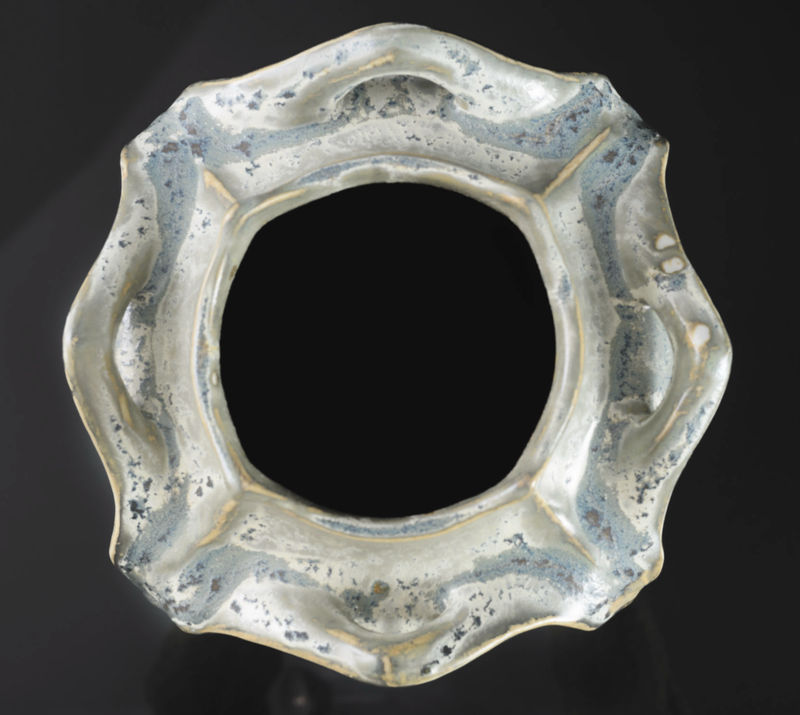
Although the identities of many of the artists and technicians working at the Atelier de Glatigny remain unknown, the workshop was recognized by contemporary critics as one of the finest producers of Art Nouveau ceramics in France. Its brief but innovative output exemplifies the late nineteenth-century revival of artistic pottery, in which chemistry, craftsmanship, and design were combined to achieve highly experimental surface effects and sculptural forms.
Active between 1897 and 1902, the workshop brought together skilled craftsmen who explored the technical and aesthetic possibilities of high-fired ceramics. Although small quantities of stoneware were produced, the atelier became especially known for its porcelain decorated with experimental crystalline and flambé glazes. These effects were achieved through sophisticated glaze chemistry and the use of unusual raw materials, including minerals and pigments imported from Africa and the South Pacific. The results reflected the broader Art Nouveau fascination with natural forms, color experimentation, and Asian ceramic traditions.